Find the customers your revenue total is hiding.
See who has gone quiet, which invoices are unpaid, and where revenue depends on too few customers. Connect your payment data, then get a 30-day roadmap for what to review first.
$97 one time, with 100 credits included. No monthly subscription required.
Paying opens a secure Stripe page and means you accept the terms, including the refund policy for this scan, and the privacy policy.
One time. Includes the Private Revenue Review, at no extra charge.
You did not miss anything. You were handed a total, and a total is the one number that cannot show you a person.
The scan reports what your records prove and nothing beyond it. What changes after that depends on your business and what you do next.

Read-only. It can see payments and customers. It cannot move money or contact anyone.
There are no testimonials on this page. The scan is new, and the first ones will be real or absent.
What this is not
- A benchmark against other businesses
- A forecast of what you will recover
- A course or a community
- A dashboard you need to learn
Why it exists
A paying customer of mine went quiet and I found out at the cancellation, not before. The total had not moved enough to make me look. I did not need a report on my business. I needed a name and a date, early enough to pick up the phone. That gap is what this scan measures.
The founder, BizGen
Introducing
The Revenue Leak Scan
One read of your payment history that names the customers your total is hiding.
You connect the account your money lands in, read-only. BizGen works through every customer against their own pattern and comes back with four short lists of names, each with a date and the working, plus a plain note on what payment data cannot know.
You do not have a churn problem. You have a totals problem.
Your payment platform and your bank both answer the question of how much came in. Neither answers who is missing. So a good customer stops, the total moves by one small line, and you learn about it when the cancellation email lands. That is not carelessness. It is what totals do.
How it works
Paying is the button. These are the three things that happen after it.
Connect where the money lands
Stripe, Square, Shopify, QuickBooks and more. Read-only. A few minutes of your time.
Read the names, then your roadmap
Four lists, every name with the date it changed and how that was worked out. Then a four-week roadmap built from those lists and your assessment answers: who to call first, and which two systems to put in.
Sit down with a person who has read it
The Private Revenue Review is included with the scan, at no extra charge. You book it from your findings page, once there is something to review.
Your part is the few minutes it takes to connect. The reading is done for you.
Who this is for
You run a coaching program
Members pay monthly or by instalment, and the one who stops is a line you never see.
You run an agency or retainers
Invoices go out every month, and outstanding is one number that hides which client is late.
You run a membership, studio or community
People pay until they stop, and the total shrinks too slowly to notice on its own.
If every sale is a new customer, you will still get a report, and fewer of these findings will apply to you.
Where you are now
- The monthly figure looks fine, so you get on with the day.
- The cancellation email is how you find out someone left, and by then the conversation you could have had is gone.
- Unpaid invoices live in a tab you open when cash gets tight.
- You could not say, right now, which three customers your revenue would fall apart without.
Where you are after the scan
- You read four short lists of names, not a total.
- You know who slipped against their own rhythm, with the date, instead of hearing it from the cancellation.
- You know what is unpaid and how much of it is overdue, on one line per status.
- Once you have enough paying customers for it to count, you know the three names your revenue leans on.
- You have a four-week roadmap built from those names: who to call first, and which two systems to put in.
- If the lists come back empty, you know that too, and the roadmap says what to keep doing.

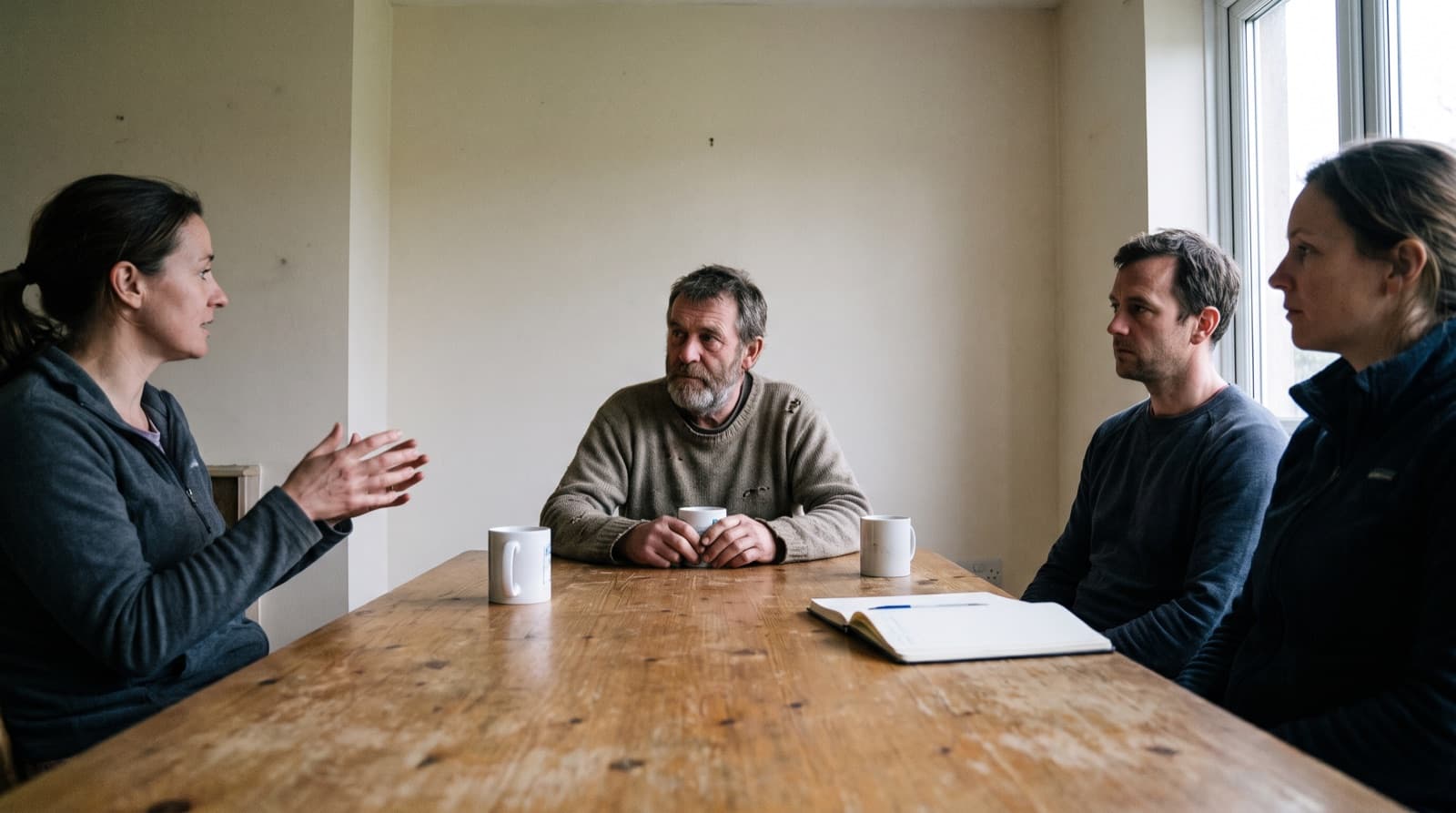
After hours, with the names in front of her instead of a total.
What you do with the names is yours to decide. The scan reports what your records prove. It does not recover anything for you, and results depend on your business and what you do next.
What changes when you read names instead of a total
If you keep the total
Keep reading the total
Every month the notice gap runs its full length. The customer who stopped stays invisible until they cancel, and the ones who slipped never show up at all.
If you read the names
Read the names
The gap is measured once, against your own history, and you see whether there is anyone to call this week. The total stops being the only thing you have.
What it names
Four things, each measured against your own history. Every one names the customer and the date, and shows the working.

Slipping
Who has broken their own payment rhythm
Nobody misses a payment loudly. They go a little longer than usual, then a little longer again.
- Learns each customer's own rhythm from your history
- Flags anyone overdue by double it: a monthly payer at 60 days, a weekly one at 14
- Measured against their pattern, never a rule of thumb
Nothing to set up. The rhythm is learned from the history you connected.

Stopped
Who already stopped, and when
A long gap in payments deserves a closer look. Check the customer's agreement and recent conversations before deciding what changed.
- Paid at least twice and spent at least $100
- Past six times their own usual payment gap and at least 60 days quiet
- One-off and steady annual payers stay out; a payment gap does not prove someone left
No tags to maintain and no list to keep. The floors are already set.

Unpaid
What is sitting unpaid, by status
Your invoicing tool shows outstanding as one figure. One figure cannot tell you which client is the problem.
- Everything outstanding
- How much of it is overdue
- The breakdown by status
Nothing to reconcile. It reads what your invoicing tool already knows and lays it out.
Concentration
Who your revenue depends on
Three names can hold most of what you collect, and you only feel it the month one of them leaves.
- The share of revenue held by your top three customers
- Reported only once you have at least eight paying customers and $2,500 collected
- A fact, not a verdict: whether that share is a risk depends on who those names are
It appears on its own once there are enough customers for it to be true.
The Notice Gap
You are not buying a report. You are measuring your notice gap.
The notice gap is the time between a customer stopping and you noticing. In a recurring business it is the only window in which a conversation still changes anything, and your payment platform does not measure it. Your platform reports totals and your bookkeeper reconciles months. Neither reads names.
What goes in
- Read-only access to the account your money lands in
- Your own payment history, nothing else
What comes out
- Four lists of names, each with a date and the working
- A 30-day roadmap built from those lists and your assessment answers, yours to print
- A plain note on what payment data cannot know
- A person who has read it, in the included review, when there is something to review

Then sit down with a person who has read it
The Private Revenue Review comes with the scan. Once your findings and your roadmap are in front of you, book a session and go through them together: which names actually matter, and what to do about them in the next 30 days. You book it from the findings page, once there are findings to review.
What $97 includes
The Revenue Leak Scan
$97
One read of your payment history. Four named lists, the working shown.
Your 30-day revenue roadmap
Included
Four weeks built from those lists and your assessment answers. The people to call, with an opener for each. The invoices to collect. The names your revenue leans on. Two systems to put in. Yours to print and run.
The Private Revenue Review
Included
A session with a person who has read your findings and your roadmap. Booked from your findings page when there is something to review.
100 credits in your account
$100
For the rest of BizGen once you are in. The same credits sell in packs at this price.
Your findings page
Included
Lives in your BizGen account, so the names, the dates and the roadmap are there when you go back.
What the report will and will not do
- 01If your records come back clean, the report says so and stops. Nothing is manufactured to justify the $97, and nobody books you onto a call to go through a clean result.
- 02No benchmarks and no percentiles. Your numbers are never compared to anyone else's, because we do not have anyone else's.
- 03No forecast of what you will recover. It reports what your records prove and not one dollar beyond it.
- 04Read-only. It cannot move money, change a price, issue a refund, or contact a customer.
- 05It cannot know why. Whether anyone called the customer who stopped, whether they meant to leave, whether a refund was a complaint or a favour: that needs the systems around the money, and that is a separate conversation we only have if your numbers justify it.
The founder, BizGen
Built for businesses that get paid more than once
Coaching programs, memberships, agencies, retainers. Anywhere a customer's silence costs you money every month they stay silent.
Paying opens a secure Stripe page and means you accept the terms, including the refund policy for this scan, and the privacy policy.
One time. Includes the Private Revenue Review, at no extra charge.
Nothing on this page is a forecast of revenue you will recover. The scan reports what your records can prove and nothing beyond it. Individual results vary and depend on your business and what you do next.
Questions
What do I connect?
The account your money lands in. Stripe, Square, Shopify, QuickBooks and more. Access is read-only and takes a few minutes to set up.
Is it safe to connect?
The connection can read payments and customers. It cannot move money, change a price, issue a refund, or contact anyone. You can disconnect it from your account whenever you like.
How long until I see names?
It depends on how much history there is to read: how many customers, and how far back your payment records go. We do not quote an average time, because that varies too much to be an honest number. Your findings page is in your account whenever you open it, and you will see the result there the moment it is ready.
What if it finds nothing?
Then it says so, and that is the answer. A clean result is a finished report, not a doorway. You keep the account and the findings page. We do not book a review to go through a clean result, because there is nothing to review.
What is in the 30-day roadmap?
Four weeks. Week one, the customers who stopped, by name, each with a suggested opener you can send in your own words. Week two, the ones slipping past their own rhythm. Week three, unpaid invoices, largest overdue first. Week four, the three names your revenue leans on. Across weeks three and four, the two systems your assessment scored lowest, each a concrete thing to put in; when one of them is the failed-payment step, it sits with the invoices. Every name and date comes from your records; the systems come from your answers. It is written to be printed and run, it says plainly what it cannot know, and a clean result gets a roadmap too.
Do I need the free assessment first?
No, but it helps. The assessment joins your answers to your scan, and week four of your roadmap is built from the two areas your answers scored lowest. Without it, the roadmap uses the two systems every recurring business benefits from. You can buy the scan on its own.
What happens after the review?
The plan from the review is yours to run yourself. If you would rather BizGen kept reading the numbers for you every week, that is something we can set up on the call. If you want a team running the whole revenue function with you, that is the AI Department. We only bring either up on the review if your numbers justify it, and never before.
Who reads my findings for the review?
For now, the founder. Reply to any email from BizGen and it lands in an inbox a person reads.